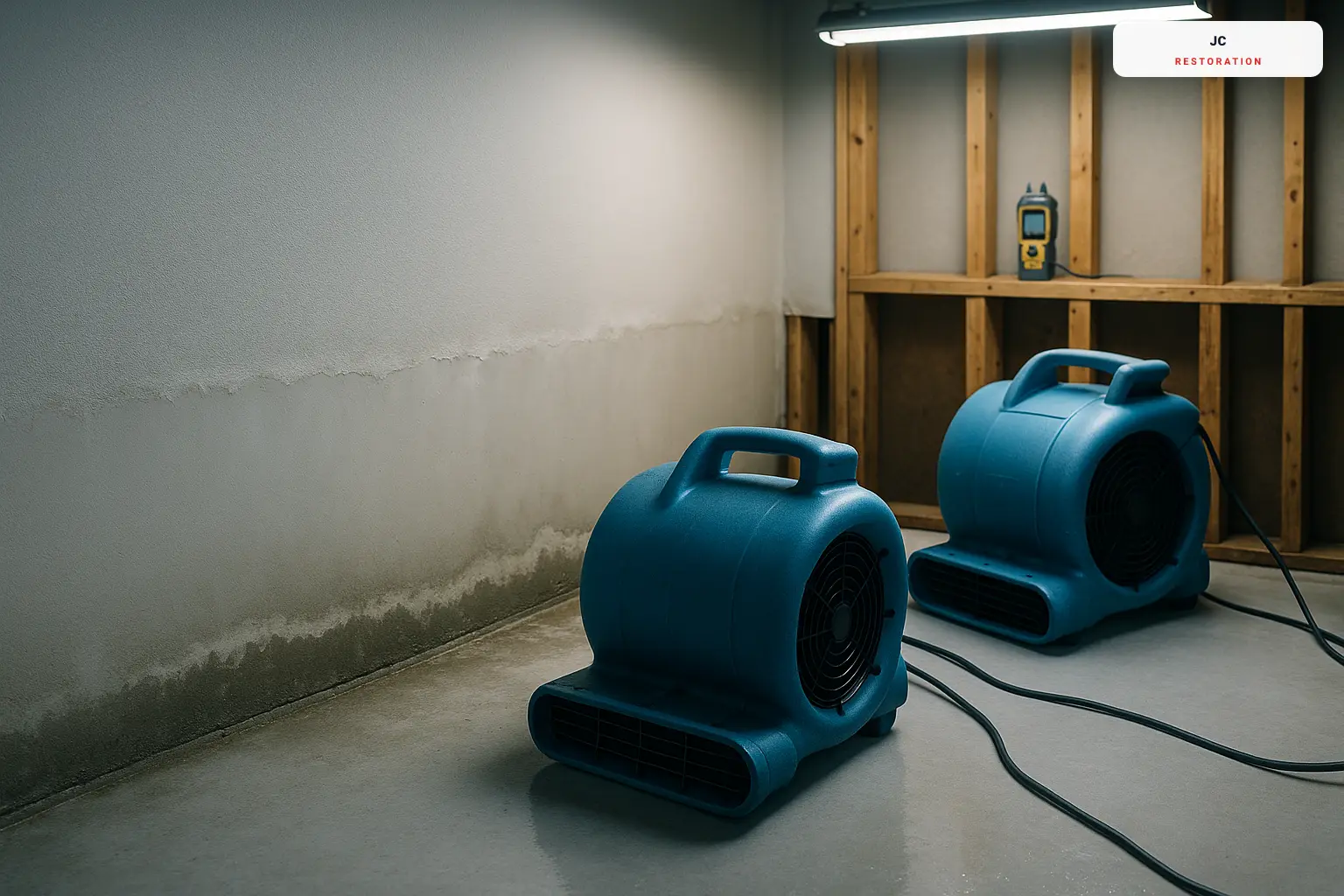
IICRC S520 Protocol — What Proper Mold Remediation Looks Like
The IICRC S520 standard defines the protocol for safe, effective mold remediation. It is not legally required in NJ but it is what good restorers follow because it is the only approach that actually works long-term. The shortcut versions (spray bleach on it, paint over it, fog with antimicrobial, leave the source moisture in place) all fail within months.
The protocol has five phases: assessment (where is the mold, how extensive, what species, source moisture identified and stopped), containment (negative-air pressure differential between affected and unaffected spaces, plastic sheeting, HEPA-filtered air scrubbers running continuously), source removal (porous materials with growth get removed and bagged for disposal — drywall to documented flood line, insulation, untreated wood), HEPA cleaning (all hard surfaces in the containment), and verification (visual inspection + optional third-party air sampling to confirm the contamination has been removed).
Reconstruction only starts AFTER verification clears. New material does not go up against contaminated substrate. Skipping verification is how you end up with mold returning behind a freshly-painted wall.