How Our Wallington Team Handles a Lodi Job
When the call from Lodi comes in, the goal is fastest-possible source-control plus right-sized equipment dispatch. The dispatcher captures the loss type (water vs fire vs sewage vs storm), the severity (a sink overflow vs a basement filling), and the access (gate codes, building manager, COIs). The crew is moving inside 10 minutes of the call ending — not 30, not 60.
On active losses (burst supply lines, sewer backups, fire and smoke calls, wind-driven water intrusion), the standard is sub-hour arrival anywhere inside our coverage radius. Lodi sits roughly 1 miles from our Wallington base, so on a normal-traffic day that translates to 10 to 20 minutes door-to-door. Storm season we pre-stage equipment for surge events so individual response times do not slip even when call volume spikes across the corridor.
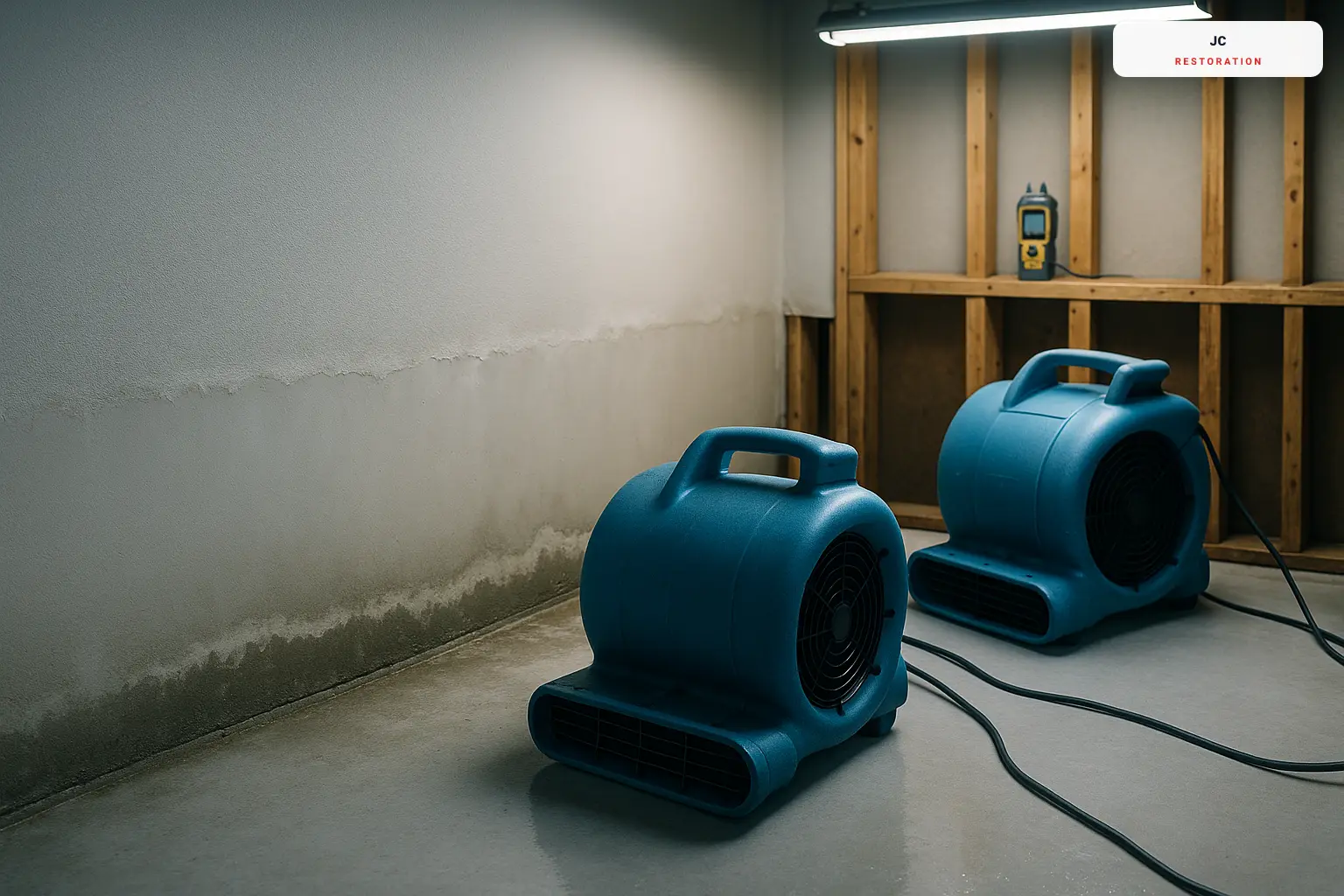
On-site protocol runs the same on every job: stop the source first, then document, then deploy equipment. Source-control means water off at the supply, electrical isolated where wet, Cat-3 areas contained. Documentation means photos of every wet surface and moisture readings of every substrate before equipment goes down. Equipment means air movers and dehumidifiers sized to the affected square footage. Daily monitoring visits log progress until each substrate hits dry-standard. Same crew handles the rebuild on the back end.
Working with adjusters on Lodi losses
The carrier paperwork on a Lodi loss starts at hour one and continues through final invoice. Daily moisture logs mapped to a building diagram, before/during/after photos of every affected surface, an Xactimate-format scope for both mitigation and reconstruction. Carrier-approved adjusters get a complete file rather than a series of follow-up requests. The cause-of-loss framing is the single most important document because it dictates which policy bucket pays and at what limits.